Fast Supplements Website Redesign
Built Fast Supplements' Shopify storefront to improve discovery-to-repeat purchase. Updated IA and mobile UX, strengthened PDP trust cues, and built lifecycle email flows to boost conversion and retention.

MY ROLE
Product + Web Designer (Shopify) / Brand & Growth (Packaging, SEO, Paid, Social)
ORGANIZATION
FAST Supplements Ecommerce Wellness Brand (Client Project)
TIMELINE
7 Months Apr 2025 – Nov 2025
TOOLS
Figma, Adobe Illustrator, Adobe Photoshop, Google Analytics, Hotjar, Canva, Mailchimp, Shopify
TEAM
Founder, Supplier / Product Partner, Solo Designer (Me), 5+ User Interview Participants
BACKGROUND
Project background
FAST Supplements is a science-backed wellness e-commerce brand serving adults 30+, with products across liver support, gut health, immunity, and energy.
Despite a strong product lineup, the website made it difficult for shoppers to quickly understand what to buy, who the brand was for, and why it could be trusted. I led an end-to-end redesign focused on goal-based navigation, trust-building content, and a clearer path from discovery to purchase.
Because this work lives on a live Shopify ecommerce platform, I'm sharing the design process and decisions rather than full internal documentation. The redesign covered 22 products across 4 categories and 8 core page templates.
PROJECT TIMELINE
7-month engagement (Website redesign + brand growth)
From first client call to ongoing optimization, the work happened in two tracks: a focused website redesign (Months 1–2), followed by brand and growth execution (Months 3–7).
Discovery, Research & Redesign Delivery
- Aligned with founder on goals, audience, and product target catalog (22 SKUs / 4 categories)
- Ran user research + competitive review to identify trust and navigation gaps
- Restructured IA from product-first to goal-based browsing
- Designed hi-fi UI system and shipped core templates in Shopify
Packaging, SEO, Paid, Social & Iteration
- Designed product labels / packaging aligned to new brand system
- Built SEO content strategy and optimized key PDP/collection pages
- Supported paid campaigns and landing-page iteration
- Planned social content direction and email flows to support retention
- Monitored performance via GA/Shopify/Hotjar and iterated on priorities
THE CHALLENGE
The existing experience created friction in four major areas
A heuristic audit of the original site revealed four patterns directly hurting user trust and conversion — all confirmed by what users said in interviews.
Cluttered, Directionless Homepage
No clear value proposition above the fold, no hierarchy guiding users toward any specific action or category.
No Clear CTA Flow
Nothing guided users from landing → exploring → buying. Buttons existed but weren't prominent, contextual, or strategically sequenced.
Missing Trust Signals
No testimonials, no certifications surfaced, no benefit-based copy. Users had zero credibility cues to feel confident in the brand.
Goal-Less Navigation
Categories organized by product type — not user health goals. A user thinking "I want gut health support" had no obvious path.
“How might we redesign the Fast Supplements experience so adults 30+ can quickly find trusted products that align with their health goals - and feel confident enough to buy?”
- DESIGN QUESTIONS GUIDING THE ENTIRE PROJECT
RESEARCH ACTIVITIES
Grounding every decision in real user insight
I ran multiple rounds of research before touching any design — ensuring every UX decision was traceable back to something a real user said or did.
5+ Interviews
Adults 30–50 on habits, trust cues, and online shopping friction
Survey
Google Form on trustworthiness signals and goal vs. ingredient shopping
Heuristic Audit
Full review of existing site: IA, CTAs, trust, visual hierarchy
Competitive Analysis
Benchmarked 6 competitor brands across 9 UX dimensions
Persona Synthesis
3 validated personas mapped directly to design decisions
KEY RESEARCH FINDINGS
Trust is the #1 purchase barrier
100% of interview participants said they research a brand before buying. Third-party testing, GMP certification, and ingredient transparency were the most cited trust signals — and all were missing from the original site.
“I’ve been burned by supplements that were basically fake. Now I won’t buy unless I see lab testing or real reviews from people like me.”
Reviews are non-negotiable for this audience
Adults 30–50 overwhelmingly rely on peer reviews over brand claims. 82% of survey respondents said they look for reviews before purchasing any supplement online. The original site had minimal visible testimonials.
Ingredient transparency drives conversion
Users want to understand what’s in the product and why. Phrases like “proprietary blend” were a red flag. Full ingredient lists with plain-language explanations were strongly preferred.
COMPETITIVE ANALYSIS
Benchmarking six competitors across nine UX dimensions
I benchmarked FAST against Snap Supplements, New Chapter, Gaia Herbs, 1MD, Sustained Health, and Pure Micronutrients — revealing clear patterns in what top-performing wellness brands do differently. Hover on any cell for details.
| Feature | FAST SUPPLEMENTS | SNAP SUPPLEMENTS | NEW CHAPTER | GAIA HERBS | 1MD | SUSTAINED HEALTH |
|---|---|---|---|---|---|---|
| Homepage Clarity | ⚠No clear value prop, no hierarchy | ✓Clear CTA + product tiles in organized layout above fold | ✓Lifestyle imagery, values-led messaging, clean design | ✓Nature-forward hero, strong brand identity | ✓Trust-centric, doctor endorsements, credibility first | ✓Clear wellness message, product spotlights above fold |
| Product Discovery | ⚠Category filters exist, not on homepage | ✓Clear product categories + goal filters in nav | ✓Mega menu by life stage, goals, and ingredients | ✓Ingredient-based + health goal categories | ✓By organ system + comparison tools | ✓Health goals vs clear product groupings |
| Product Page UX | ⚠Basic layout, no reviews, no bundles, minimal benefits copy | ✓Reviews, benefits, usage suggestions, bundle offers | ✓Benefits, sourcing info, clinical trial references | ✓Ingredient detail, sourcing transparency, farm origins | ✓Charts, benefits breakdown, comparison to formulated blends | ✓Clear benefits USPs, customer testimonials |
| Call-to-Action | ⚠Buttons present, inconsistent, not contextual | ✓Sticky "Add to Cart" + Subscribe and Save" across pages | ✓Bold CTAs, warm palette, affirming benefit-first copy | ✓Strong CTAs with natural icons, clear benefit CTAs | ✓Purchase CTAs with credibility anchors (healthy) | ✓Large "Shop Now" + "Learn More" strategically placed |
| Trust Building | ⚠Limited testimonials, no certs visible, minimal social proof | ✓Lab-tested badge, reviews, trust bar on homepage | ✓Clinical proof, certified organic, B-Corp, 50yr heritage | ✓Sustainability creds, third-party certifications | ✓Physician experts, third-party testing, "doctor approved" | ✓Natural trusted messaging, 3rd-p testing badges |
| Navigation | ⚠Simple dropdowns, product-first, no icons or goal labeling | ✓Dropdowns with health goals + icons, "Benefits" CTA | ✓Rich mega nav with icons, life stages, goals, certs | ✓Goals, health, education categories, sustainability all linked | ✓Organ system nav + comparison tools, resource link | ✓Goals, bundles, blog, and about + visible in nav |
| Checkout Flow | ⚠Standard Shopify, no upsells, no subscribe option | ✓Slide-out cart + subscribe and save | ✓Smooth checkout with bundle offers, subscription incentives | ✓Bundled subscriptions, intuitive flow, values-aligned | ✓Smooth checkout + free trial setup for subscriptions | ✓Secure, fast checkout with bundle savings visible |
| Content Engagement | ⚠Blog exists but not promoted, no product cross-links | ✓Blog, video guides, educational content, quiz | ✓Robust blog + quiz-based product guides + newsletter | ✓Herbal education hub + podcast + assuring content | ✓Science blog, video series, doctor explainer content | ✓Blog exists, not deeply educational, product-linked |
| Personalization | ⚠No quiz, no product suggestion tools, no bundles | ✓Supplement quiz + suggested bundles based on goals | ✓Health assessment quiz + tailored bundle recommendations | ✓No quiz, bundle suggestions within some categories | ✓Personalized plan via quiz, "doctor protocol" flow | ✓No quiz (bundle suggestion exists some categories) |
KEY INSIGHT
Top-performing wellness brands use benefit-based navigation, earthy calm aesthetics, and surface trust signals prominently — especially testimonials, certifications, and ingredient explanations. These became the three design pillars for the FAST redesign.
PERSONAS BASED ON RESEARCH
Three users who represent our audience
I interviewed 5+ adults aged 30–50 and synthesized findings into three validated personas — each with distinct demographics, goals, frustrations, and specific design implications. Click to flip each card.
All three personas share one core need: they want to feel like the brand was made for them — their life stage, their health goals, their level of wellness literacy. The redesign had to feel personal, not generic.
DESIGN STRATEGY
Four principles that shaped the redesign
Every design decision traced back to research. These four strategies formed the backbone of the redesign — each addressing a distinct gap uncovered during discovery.
INFORMATION ARCHITECTURE
Redesigned navigation taxonomy
The new site structure organises every product into goal-based categories and ingredient-level sub-navigation — so shoppers can enter by health goal or by specific ingredient, with equal ease.
The dual discovery system — ‘Shop by Goal’ + ‘Shop by Ingredient/Benefit’ — was designed to serve both ends of the supplement literacy spectrum. New users enter via goal; experienced users enter via ingredient. Both paths are equally supported.
BEFORE VS AFTER
What changed and why it matters
Product-first navigation with no goal context for users
Cluttered homepage — no hierarchy or guided purchase path
No testimonials, certifications, or benefit-based copy visible
Blog buried and disconnected from product pages
Visual identity felt too youthful/chaotic for 30+ audience
No product quiz, no bundles, no discovery tools
Poor mobile experience — small CTAs, slow load, no structure
Goal-based nav: Targeted Health · Core Wellness · Sports · Benefits
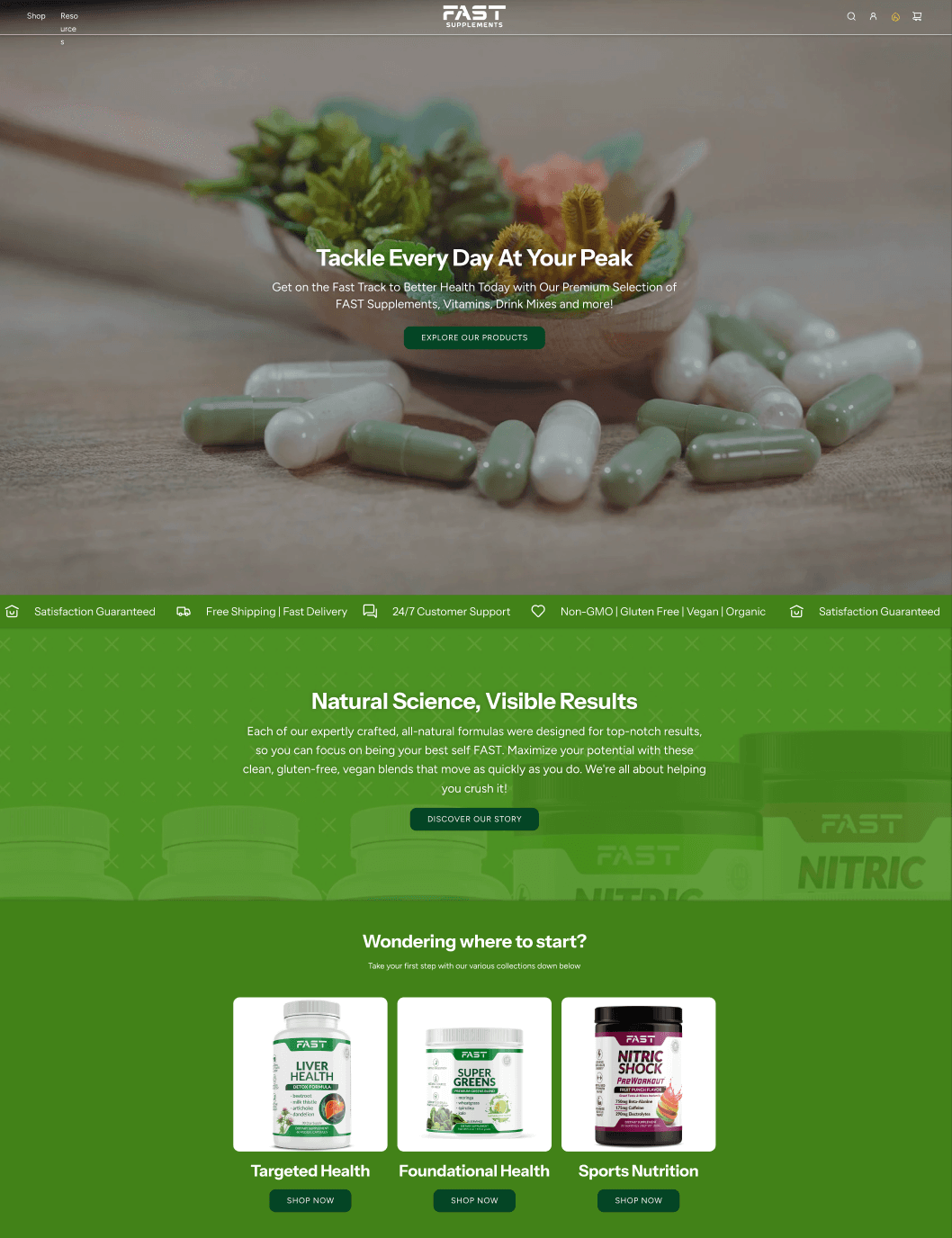
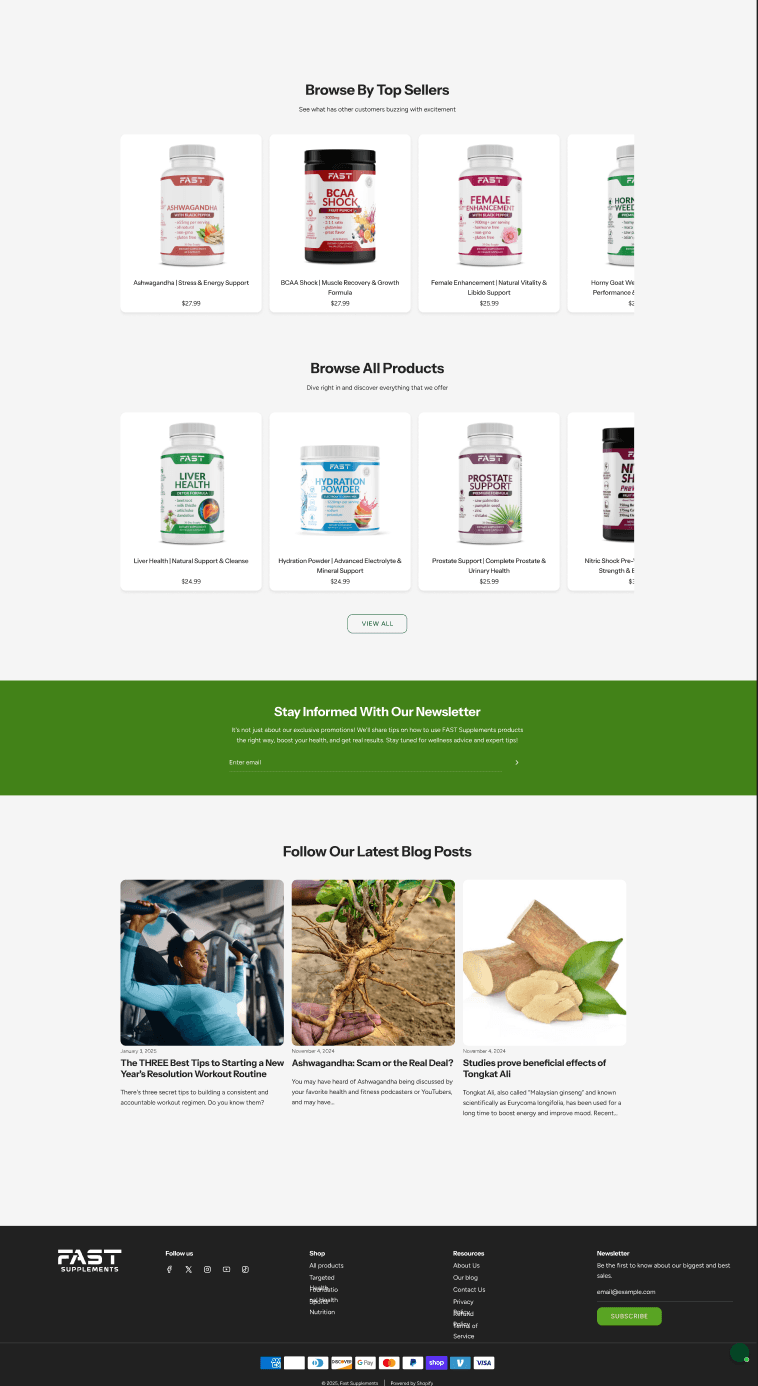
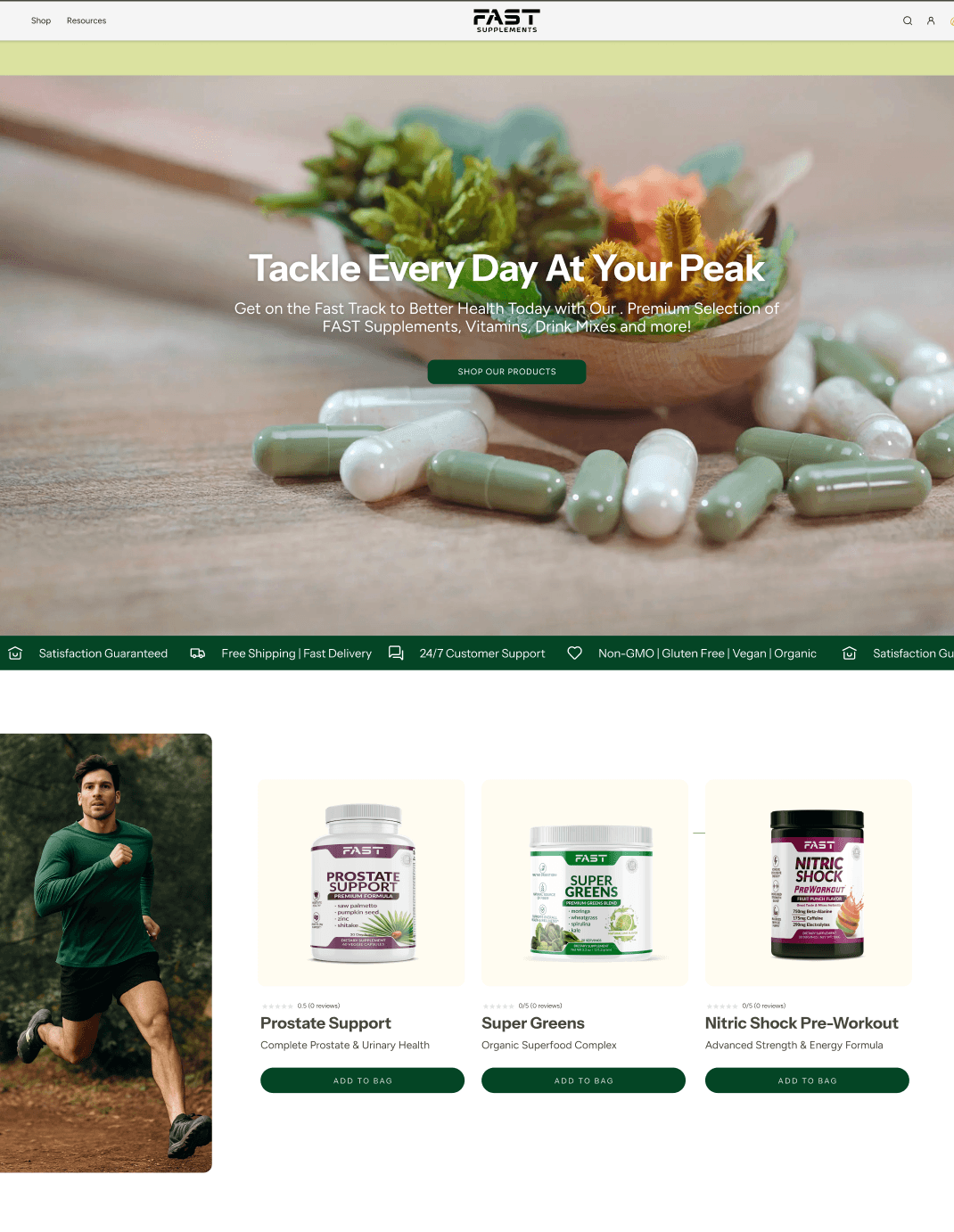
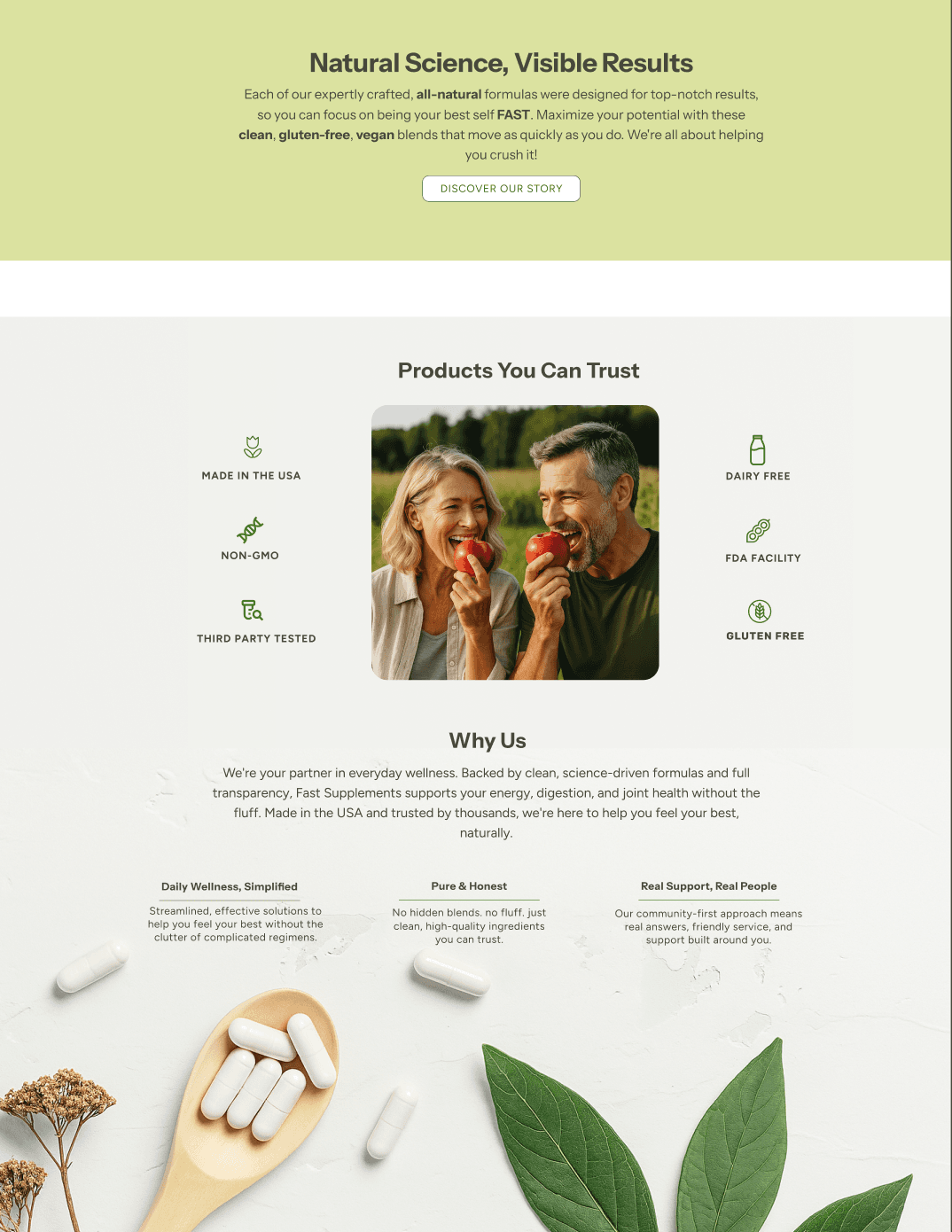
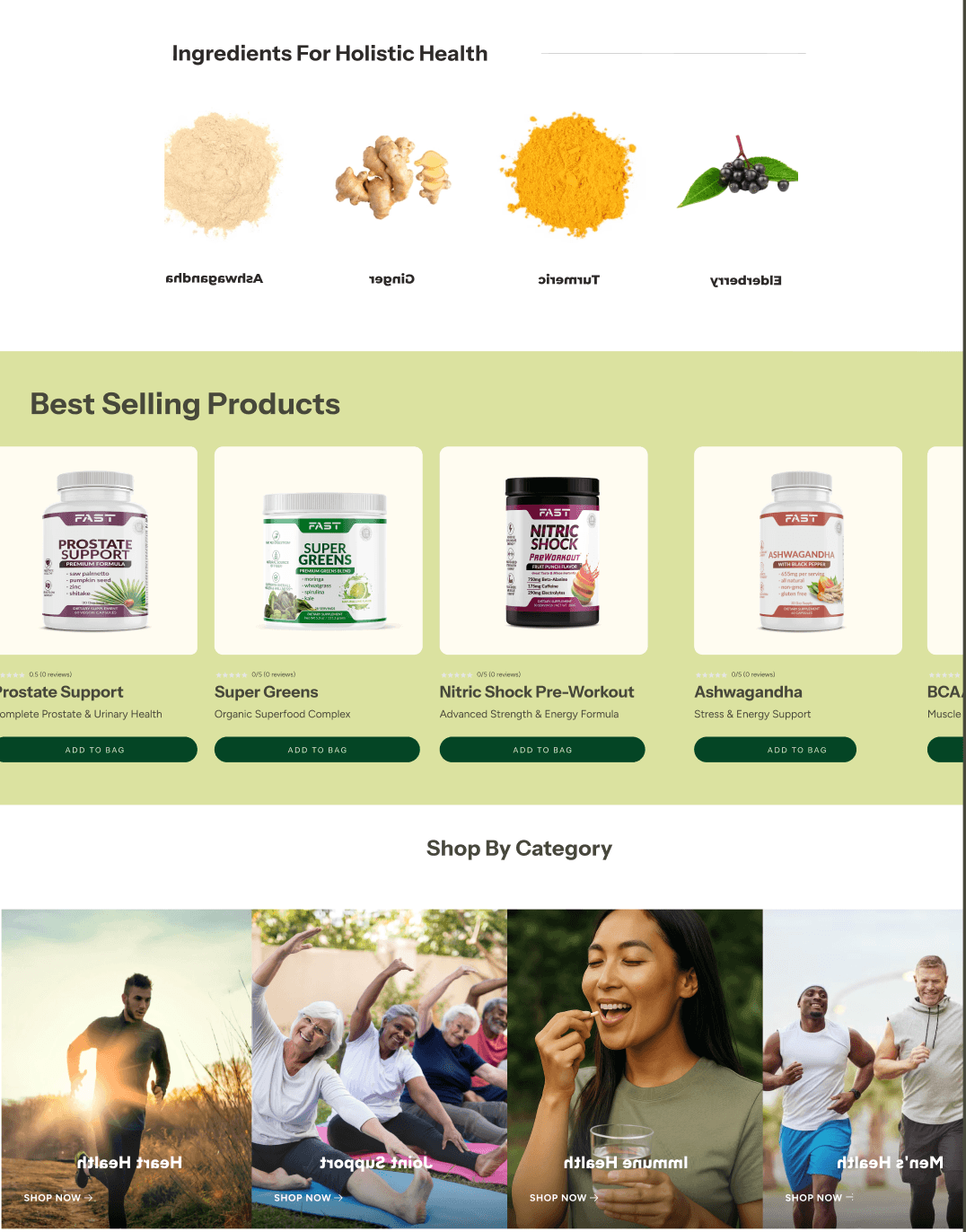
Clear homepage flow: value prop → goals → best sellers → trust → blog
Reviews, GMP callouts, benefit icons, full ingredient transparency
Blog prominently featured; cross-linked from product pages
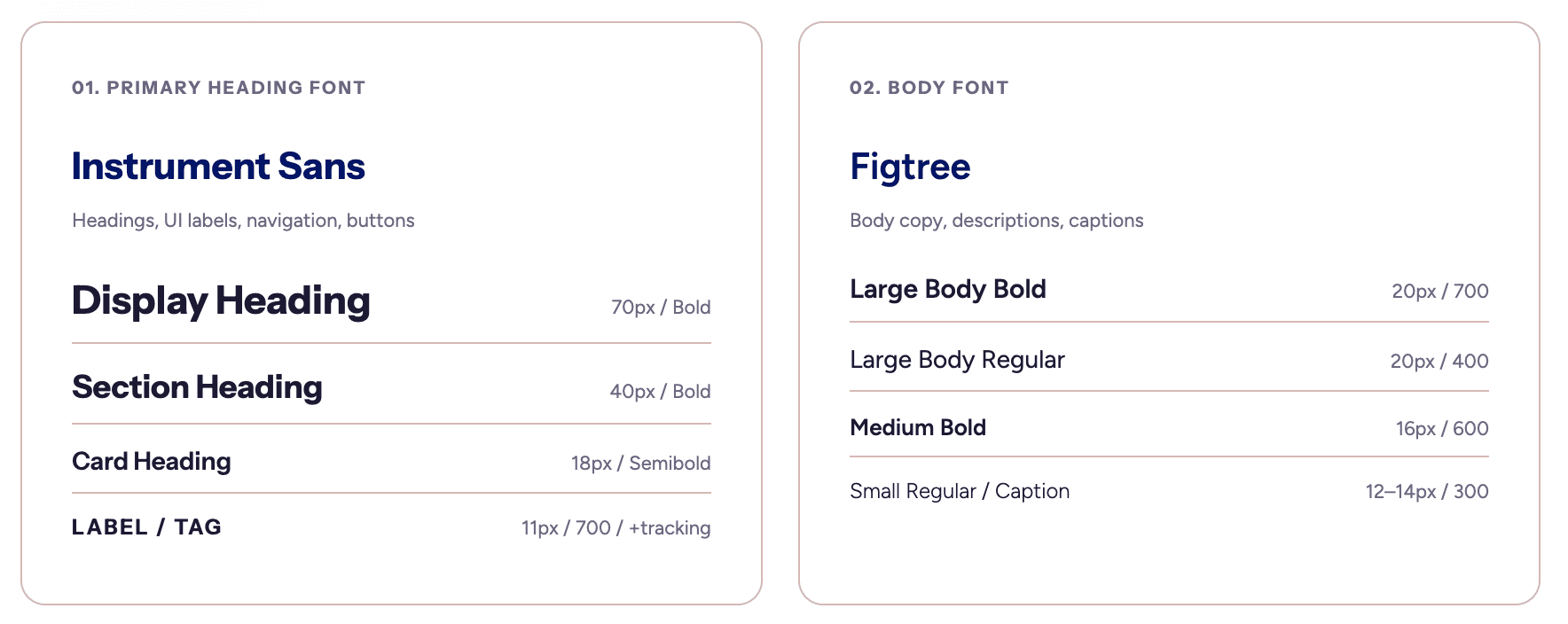
Clean, calm aesthetic with Libre Baskerville + Instrument Sans
Welcome email + abandoned cart email designed and launched
Mobile-first responsive design with large tap targets and clear CTAs
WIREFRAME COMPARISON – HOMEPAGE STRUCTURE

UI STYLE GUIDE
Visual language built on trust and clarity
03.COLORS
Brand Colors
State Colors
Black Colors
Grey Colors
03.BUTTONS
Default
Hover
Button Rules
- Primary buttons use brand green (#044525) with white text
- Hover state reduces opacity to 80%
- Always use rounded-full for pill shape
- Minimum padding: 24px horizontal, 12px vertical
04.IMAGES



KEY SCREENS DELIVERED
What was built and shipped
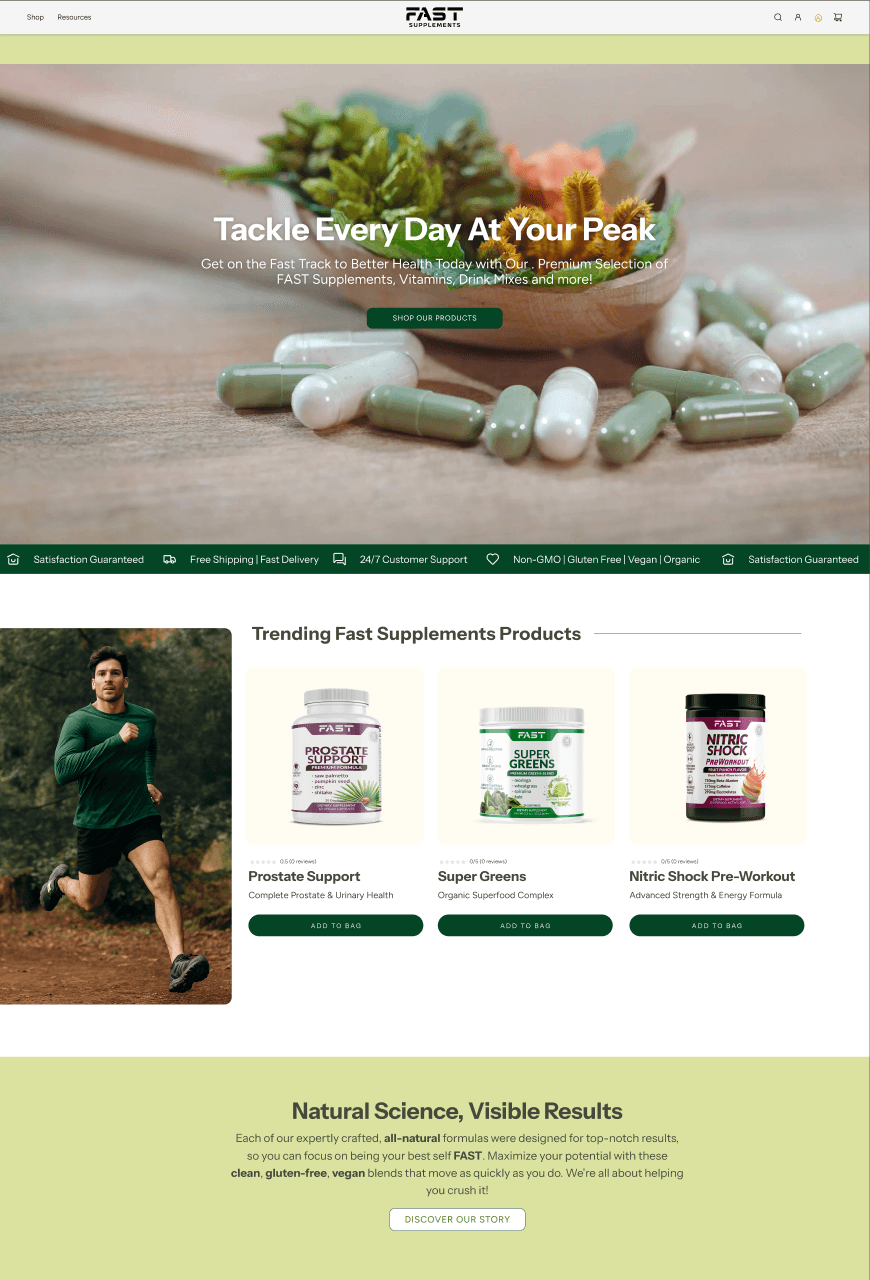
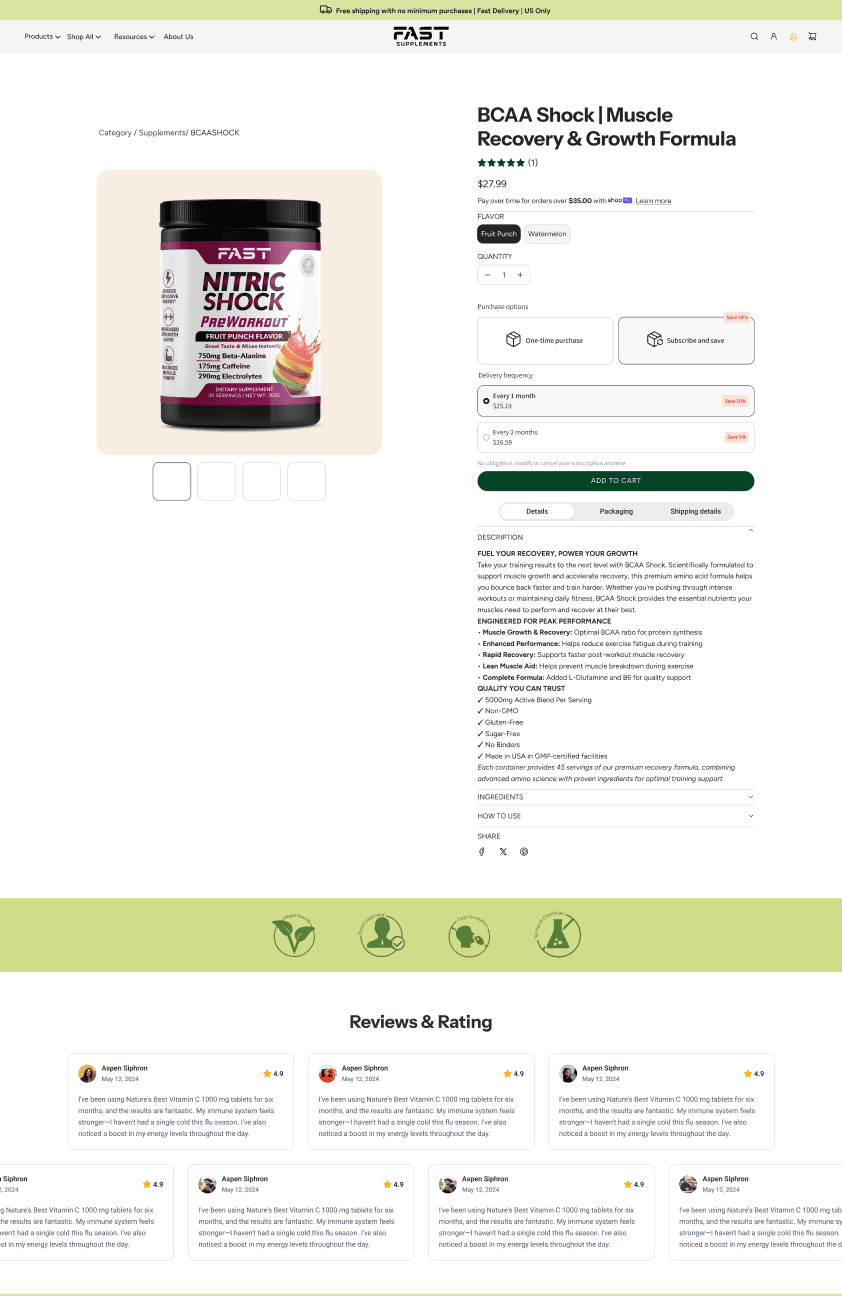
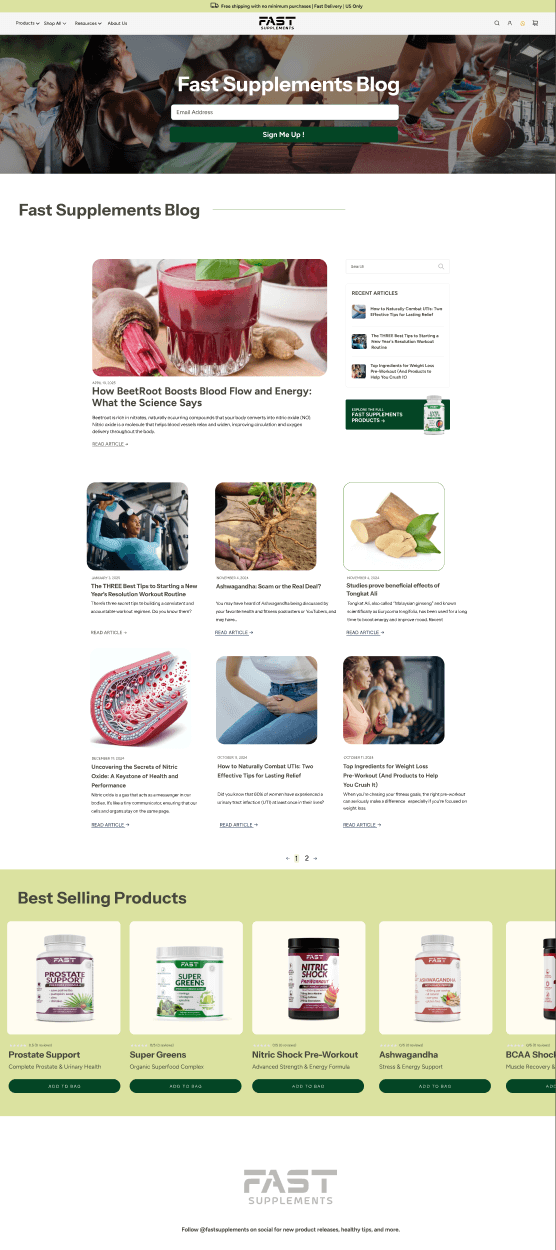
Nine core page templates plus two email flows and social content direction — each following the established design system and directly addressing the problems found in research.
Homepage
Hero, goal categories, best sellers, trust signals, blog CTA PAGE TEMPLATE
Product Page Template
Benefits, ingredients, reviews, bundle upsells, related blog PAGE TEMPLATE
About Page
Founder story, mission statement, GMP/USA/Vegan trust badges PAGE TEMPLATE
Blog Page
FAST Health & Wellness — article cards, categories, product CTAs PAGE TEMPLATE
FAQ Page
Shipping, ingredients, dosing safety, returns, subscription info PAGE TEMPLATE
Contact Page
Contact form, support team intro, FAQ quick-link, live chat PAGE TEMPLATE
Welcome Email
“You’re in! Welcome to the FAST family” + FAST10 discount code EMAIL TEMPLATE
Abandoned Cart Email
“Still thinking about it?” — personalized product + incentive EMAIL TEMPLATE
Social Media Content
Instagram + Facebook — product spotlights, educational posts, brand voice SOCIAL
RESULTS & IMPACT
What improved after launch
Measured outcomes from tracking during and after the redesign period showed meaningful improvements across the three metrics that matter most for ecommerce wellness brands: engagement quality, retention, and brand growth.
Increase in average session duration — users stayed longer and explored more products before exiting
Decrease in bounce rate — clearer CTAs and a guided homepage flow dramatically reduced immediate drop-off
New social media followers gained in one month — consistent brand identity drove community growth
These results make sense: users now see clear goal categories and next steps immediately. The brand feels trustworthy through surfaced reviews and education. The UI matches adult 30+ expectations — clean, calm, never chaotic. And CTAs are contextual, reducing drop-off at every funnel stage.
Note: These results are from early post-launch tracking (1–2 months). Full A/B test data and longer-term conversion tracking would be needed to attribute specific metric changes definitively to individual design decisions. What is clear is that the overall redesign directionally improved all measured metrics.
Reflection
What I learned
The biggest challenge was balancing business goals (convert users quickly) with user needs (build trust gradually, don't overwhelm). For wellness supplements targeting adults 30+, the fastest path to conversion is usually simplicity + trust + guidance — not more features or more content above the fold.
This project reinforced my belief that research-first design is worth the investment. Every major UX decision — the goal-based IA, the trust section placement, the calm visual tone — came directly from what real users told me, not from assumptions.
Biggest Challenge
Translating “trust” into concrete design decisions
Trust is a vague, multi-layered user need. Translating it into specific, testable design decisions was the hardest part: Where to place certifications? What tone to use in CTAs? How much ingredient detail to show on each page? How to feel age-inclusive without being patronizing? Each question required synthesis of multiple research inputs and multiple rounds of iteration.
What I'd Do Next
Add a product quiz and subscription bundle builder
Both were identified as gaps in the competitive analysis and directly address what Mark and Linda need: guided decision-making without overwhelming choice. A “Find Your Routine” quiz would also generate first-party data about user health goals — invaluable for personalization and email segmentation. Next step would also be full A/B testing infrastructure to measure individual design decisions, not just overall site performance.
If I could redo one thing: I would have pushed harder for usability testing on the redesigned wireframes before moving to high-fidelity. We moved quickly due to timeline constraints, and a moderated test with 5 users at the wireframe stage would have caught a few navigation assumptions early.
Next Case Study