Decision Confidence inSocial Commerce

Designing a trust-centered product framework that reduces shopper hesitation and increases decision confidence across the TikTok Shop ecosystem.

UX ResearchProduct StrategySocial CommerceTrust DesignPrototyping
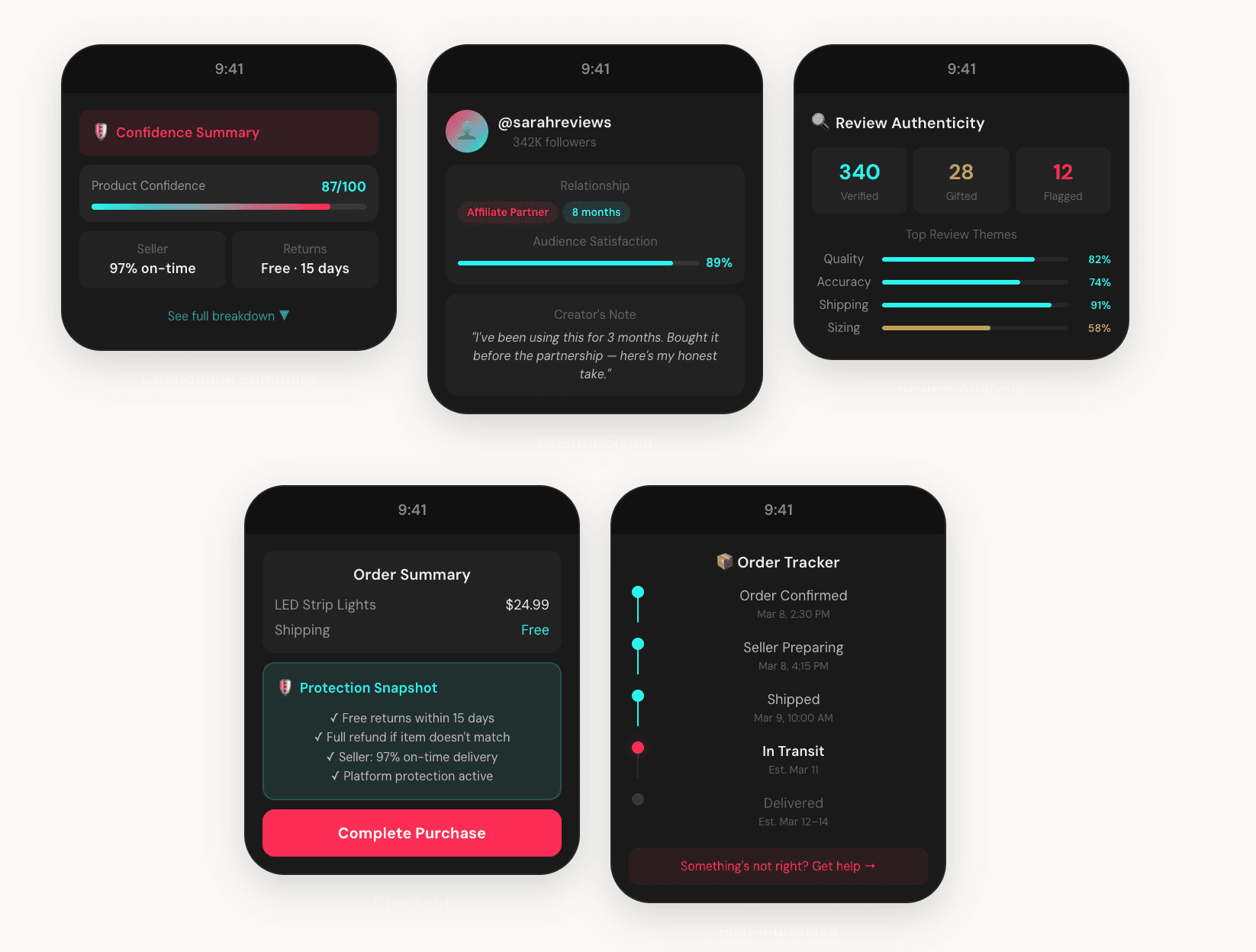
Five TikTok Shop mobile screens showing confidence summary, creator review authenticity, order summary and live order tracker concepts.

MY ROLE

UX Researcher & Product Designer

  • UX Research
  • Competitive Analysis
  • Product Strategy
  • IA
  • Interaction Design

ORGANIZATION

Decision Confidence inSocial Commerce(Case Studies)

TIMELINE

3 Months · Sept–Dec 2024

TOOLS

Figma, Miro, Optimal Workshop

SCOPE

End-to-End Concept Design

BACKGROUND

Why confidence is the real conversion lever

Social commerce, the fusion of social media content and shopping, has become a dominant force in e-commerce. Platforms like TikTok Shop, Instagram Shop, and Shopee Live generate billions in transactions by compressing the path from discovery to purchase into seconds.

But this speed comes at a cost. Shoppers are making high-stakes decisions in low-information environments. They see a product in a creator’s video, feel interest, and are immediately asked to buy, often without the trust infrastructure they’d have on a traditional e-commerce platform.

This project investigates a central question: How might a social commerce platform reduce hesitation and increase decision confidence for shoppers, creators, and sellers, without resorting to pressure tactics?

The product concept, “Confidence Layer,” is a system-wide trust framework designed to feel native to TikTok Shop — surfacing the right trust signal at the right moment across the entire purchase journey.
of social shoppers hesitate before checkout
76%
abandon due to trust concerns
43%
more returns in social vs. traditional e-com
3.2×
unsure if creator recommendations are genuine
61%

THE CHALLENGE

Shoppers are deciding fast — but not deciding confidently

Through competitive analysis, secondary research, and behavioral pattern mapping, we identified six core hesitation triggers in social commerce.

  • 01

    Product Authenticity Doubt

    Shoppers can't verify whether the product matches what they see in fast-paced creator content. Lighting, angles, and editing can mislead.

  • 02

    Creator Incentive Opacity

    Viewers don't know if a recommendation is genuine or paid. This uncertainty undermines the social proof that makes social commerce work.

  • 03

    Seller Reliability Unknown

    Small and unfamiliar sellers dominate social commerce, but shoppers have no meaningful way to evaluate their track record.

  • 04

    Review Manipulation Anxiety

    Ratings feel inflated. Shoppers suspect incentivized or fake reviews but have no tools to distinguish authentic feedback.

  • 05

    Return / Refund Ambiguity

    Buyers don't know how return protection works or what happens when something goes wrong. This uncertainty inflates the perceived risk of purchase.

  • 06

    Post-Purchase Regret Gap

    The delay between buying and receiving creates anxiety. Without proactive communication, doubt compounds during the waiting period.

“How might we help social commerce shoppers make faster, more informed decisions — while respecting their autonomy and building long-term platform trust?”

RESEARCH INSIGHTS

Three user groups, three trust equations

We mapped the goals, anxieties, and trust needs for each user group in the social commerce ecosystem.

Goals

Find products they'll love, avoid scams, buy with peace of mind, get help if something goes wrong.

Anxieties

“Is this too good to be true?” “Will it look like the video?” “Can I return it?” “Is this creator just doing this for money?”

What Trust Means

Predictability — knowing what they’ll get and what recourse they have if something goes wrong.

Information Needed

Product authenticity signals, creator transparency, seller track record, return/refund clarity, platform protection scope.

Top hesitation drivers in social commerce

  • 76%Product authenticity
  • 61%Creator transparency
  • 54%Seller reliability
  • 49%Review credibility
  • 43%Return policy
  • 38%Platform protection

PRODUCT CONCEPT

Confidence Layer: contextual trust, not information overload

Instead of dumping all trust information in one place, Confidence Layer delivers exactly the right trust signal based on where the user is in their journey and what kind of hesitation they’re experiencing.

  • DISCOVERY

    Is this creator genuine?

    Creator Signal Card
  • EVALUATION

    Can I trust this product?

    Confidence Summary
  • CHECKOUT

    What if it goes wrong?

    Protection Snapshot
  • POST-PURCHASE

    When will it arrive?

    Expectation Tracker

KEY FEATURES

Six interventions across the purchase journey

Each feature addresses a specific hesitation trigger identified in research. Click any card to preview the product screen.

  • 01

    Confidence Summary

    At-a-glance trust dashboard on product pages showing product authenticity score, seller trust rating, and creator endorsement context combined with key purchase trust factors.

    Shoppers

    View screen

  • 02

    Creator Signal Card

    Transparent disclosure showing creator partnership status, past product recommendations, audience satisfaction rate, and the criteria they use when they choose products to feature.

    Shoppers + Creators

    View screen

  • 03

    Review Authenticity Layer

    AI-powered review scoring that highlights verified purchases, flags suspicious patterns, and surfaces the most relevant feedback by filtering by shopper, and tagging key product attributes.

    Shoppers + Sellers

    View screen

  • 04

    Protection Snapshot

    Clear breakdown shown at checkout explaining exactly what happens if the product is damaged, lost, or doesn't match expectations, and whether platform guarantees apply.

    Shoppers

    View screen

  • 05

    Hesitation-Aware Nudge

    Context-sensitive prompts that appear at moments of uncertainty. If a user lingers on a gamut nudge surfaces the most relevant trust signal to address their specific concern.

    Shoppers

    View screen

  • 06

    Expectation Tracker

    Post-purchase reassurance showing shipment status, delay warnings, and one-tap support. Reduces anxiety by keeping buyers informed at every step until delivery.

    Shoppers

    View screen

USER FLOW

From discovery to confident purchase

The primary shopper flow demonstrates how trust information is layered across the journey — each signal arriving at the moment it’s most needed.

  1. Watches creator video

    User sees a product in their For You feed. Creator Signal Card is visible as a small badge.

  2. Notices transparency signal

    Badge shows “Affiliate · 6 months · 89% audience satisfaction.” User feels informed about the relationship.

  3. Taps product link → PDP

    Lands on product page. Confidence Summary is immediately visible below the hero image.

  4. Reviews trust signals

    Sees seller narrative (97% on-time, top 15% disputes), review authenticity score, and protection coverage at a glance.

  5. Browses authenticated reviews

    Review Authenticity Layer shows 340 verified vs. 28 gifted reviews. Theme clusters help find relevant feedback fast.

  6. Adds to cart → Checkout

    Protection Snapshot appears inline. Free returns within 15 days, full refund if item doesn’t match listing.

  7. Completes purchase

    Expectation Tracker activates with estimated delivery window and proactive shipping updates.

INFORMATION ARCHITECTURE

Trust signals layered across the journey

Each surface in the app shows only the trust information relevant to that moment — never overwhelming the user with everything at once.

  • Creator Content

    • Creator Signal Card
    • Relationship type
    • Audience satisfaction
  • Product Detail Page

    • Confidence Summary
    • Seller Narrative
    • Review Authenticity
    • Hesitation Nudge
  • Checkout

    • Protection Snapshot
    • Seller delivery stats
    • Return window
  • Post-Purchase

    • Expectation Tracker
    • Proactive alerts
    • Support access
  • Disputes

    • Fairness Tracker
    • Progress timeline
    • Typical outcomes

NOVEL INTERVENTIONS

Beyond standard badges and reviews

Five research-grounded product ideas that go beyond conventional e-commerce UX patterns — designed for the unique dynamics of social commerce.

  • Trust Calibration Score

    Instead of showing raw metrics, the platform shows a personalized decision confidence score based on spend size & trust signals. Tap to see what you haven't checked.

    Why it’s different

    Most platforms surface all information equally or in standard 1 of 5 trust signals. This lets the user know what is relevant without decision-fatigue.

    Key risk

    Over-reliance on automation. Requires good UX that surfaces the information that builds LTV.

  • Creator Reputation Escrow

    When creators promote a product, their score is temporarily "staked." If the product performs poorly, their reputation score drops, and future creator-recommendation slots become harder to earn.

    Why it’s different

    Most affiliate disclosure is passive. This system makes creator reputation a skin-in-the-game signal.

    Key risk

    Could discourage risk-taking, new or niche products, or creators trying interesting things.

  • Expectation Alignment Preview

    Before purchase, a side-by-side of "what you saw in the video" vs. "what verified buyers photographed" — setting accurate expectations proactively.

    Why it’s different

    No other platform currently helps users calibrate expectations against reality upfront — it happens post-purchase.

    Key risk

    May reduce conversion on products where the video is better than reality, or reality is not visually appealing, but reduces returns.

  • Dispute Fairness Tracker

    When a dispute is filed, both buyer and seller see transparent progress steps, evidence submitted, typical outcomes for similar cases. No black boxes.

    Why it’s different

    Most platforms render disputes opaque. Transparency reduces anxiety and increases platform loyalty.

    Key risk

    Full transparency might reveal inconsistencies or bias in dispute outcomes, requiring fairer dispute resolution.

  • Community Confidence Signal

    Aggregates product satisfaction rate, review sentiment, return rate, and creator audience satisfaction — reflecting what people do, not just what they say.

    Why it’s different

    Most platforms just show star ratings or "% would recommend."

    Key risk

    New products have insufficient data to build a signal. May need a clear "not enough data yet" state instead of showing a low score.

TESTING PLAN

Validating confidence through three phases

The primary shopper flow demonstrates how trust information is layered across the journey — each signal arriving at the moment it’s most needed.

  • PHASE 1

    Concept Validation

    Participants
    12–15 shoppers, 5 creators, 3 sellers
    Approach
    Walk through simulated purchase flows with concept screens (no working prototype).
    Tasks
    Does "Confidence Layer" resonate? Do higher confidence ratings correlate with stronger purchase intent?
    What to Learn
    Does the concept resonate, understand, and value the trust signals? Which signals matter most?
    Success Sign
    Summary content in purchase decisions. Behavioral shift.
  • PHASE 2

    Prototype Testing

    Participants
    20 shoppers, 5 top growth (both / without confidence layer enabled).
    Tasks
    Complete live purchase scenario, then rate trust level before and after. Follow-up interview.
    What to Learn
    Does Confidence Layer measurably increase purchase confidence? Reduce post-purchase anxiety?
    Success Sign
    Statistically higher confidence ratings. Lower post-purchase anxiety. Lower abandonment.
  • PHASE 3

    Live A/B Test

    Participants
    Platform users (A/B test on real user sample over 30 days).
    Tasks
    Measure cart abandonment, add-to-cart rate, purchase rate, return rate, dispute rate.
    What to Learn
    Does Confidence Layer improve net conversion (conversion minus returns)?
    Success Sign
    +5% net increase. Return rate decreases. Repeat purchase rate grows over 60 days.

PROTOTYPE SCREENS

Interactive product walkthrough

Featured: the Feed flow. Additional screens are in progress.

  • Feed
  • PDP
  • Creator
  • Reviews
  • Seller
  • Checkout
  • Confirmed
  • Tracker
  • Dispute
9:41
FollowingFor You
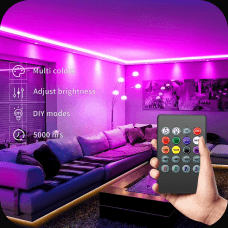
LED Strip Lights product image on the For You feed

LED Strip Lights

@sarahreviewsFollow

These LED lights transformed my room 😊 #roomdecor

Affiliate · 8mo · 89% satisfaction

LED Strip Lights 32ft

$24.9987 confidence

For You Feed — tap product to explore

REFLECTION

What this project represents

The thinking, the growth, and the direction this work points toward.

Core insight

“The biggest conversion opportunity isn’t more persuasion — it’s more confidence.”

When shoppers feel genuinely informed and protected, they convert — not because of “better persuasion” but because trust is the strongest conversion lever social commerce has.

  • cart abandonment
  • return rate
  • repeat purchases

Design approach

Trust as infrastructure, not marketing

It’s about giving users clarity to decide for themselves, not convincing them today.

Personal growth

Designing for ecosystems, not just users

Balancing shopper trust, seller fairness, and creator incentives taught me to think in systems — where every decision ripples across stakeholders.

Future explorations

  • Deeper behavioral modeling

    Smarter hesitation detection

  • AR product previews

    See it before you buy it

  • Cross-platform portability

    Trust data travels with you

  • Seller coaching tools

    Build credibility through transparency

Portfolio Statement

“The biggest conversion opportunity in social commerce isn’t more persuasion — it’s more confidence. I designed the system to deliver it.

Next Case Study

UW Libraries Website